

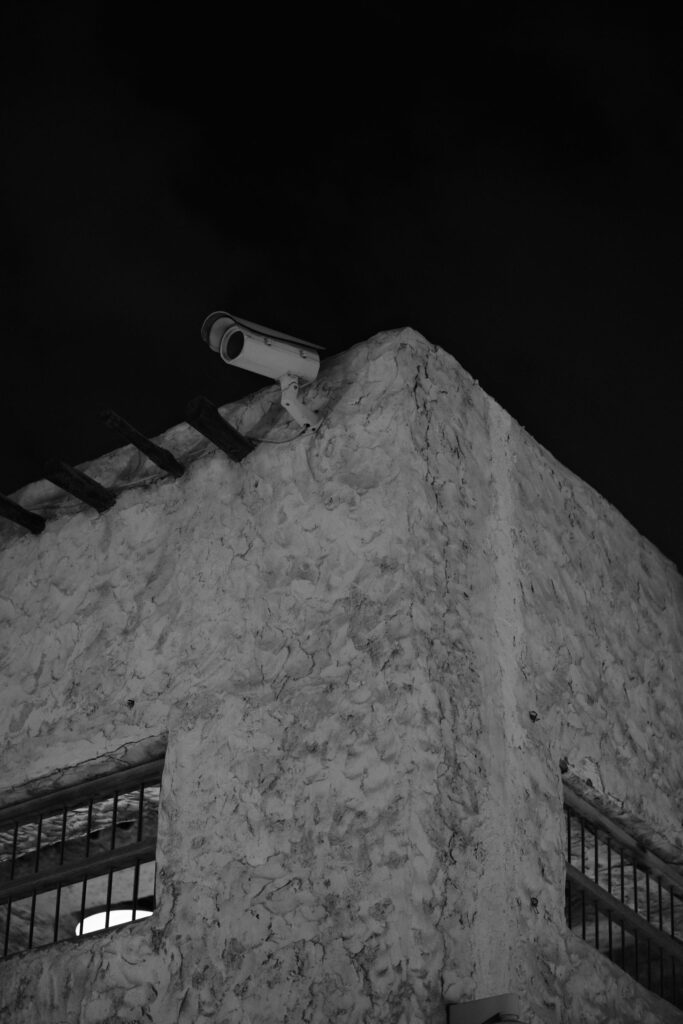
Short answer: yes — visible security cameras deter a meaningful share of burglars, but they aren’t a force field. Surveys of convicted burglars consistently find that roughly half will skip a home with visible outdoor cameras, and the deterrent gets stronger when cameras are paired with an alarm, lighting, and a yard sign. The catch is in the word visible, and in the difference between a camera that simply records a crime and a system that actually responds to one. Here’s what the research shows — and how to make your cameras work.
Key takeaways
- About half of burglars avoid homes with visible outdoor cameras, and alarm indicators deter even more.
- Hidden cameras don’t deter — if a criminal can’t see it, it can’t change their mind. They only capture what already happened.
- Signs alone deter ~25%, but a sign with no real system behind it is a bluff experienced burglars can call.
- Cameras work best layered — alarm + lighting + signage + 24/7 monitoring multiply the effect.
- The real upgrade isn’t more cameras; it’s active deterrence — modern cameras that detect a person and respond on their own with lights, sirens, and even a live voice, so a triggered camera stops a crime instead of just recording it.
- The most powerful option is live video monitoring: a real operator who sees the threat in real time, speaks to the intruder directly, and dispatches police — preventing crime, not documenting it after the fact.
What the research actually shows
Studies on camera effectiveness are genuinely mixed — which is why an honest answer matters more than a sales pitch. Here’s the weight of the evidence.
Burglars themselves say cameras change their decision. Researchers who survey people convicted of burglary find that a large share treat visible cameras and alarms as a reason to move on to an easier target. One widely-cited university survey of 422 burglars found about half considered outdoor cameras an effective deterrent, and ranked the most effective deterrents roughly like this:
| Deterrent | Share of burglars deterred |
|---|---|
| Police nearby | ~64% |
| Indications of an alarm | ~53% |
| Outdoor cameras | ~50% |
| Security yard sign | ~25% |
| Outdoor lighting | ~16% |
| Neighborhood watch | ~13% |
Cameras can lower crime across a whole neighborhood — not just shuffle it next door. A common worry is that cameras simply push crime to the house without them. But research on densely-monitored areas (including a well-known Rutgers study of Newark, NJ) found neighborhoods with more alarm systems had fewer burglaries overall, not just displaced ones. Large municipal camera programs studied by the Urban Institute in Baltimore and Chicago were associated with real reductions in crime, with limited displacement.
The ROI is lopsided. The FBI‘s crime reporting puts the average burglary loss in the thousands of dollars, while a basic camera costs a fraction of that. Even setting aside the emotional toll of a break-in, the math favors prevention.
Where cameras fall short
The honest “case against” matters too:
- Hidden cameras don’t deter anyone. Deterrence requires visibility. A camera tucked in a fake rock catches the footage but does nothing to stop the act.
- Technology fails at the worst moments. Cameras can miss the action while panning, struggle in darkness, or fail in severe weather — exactly when you need them.
- Location and setup matter as much as the camera. Some studies (a downtown Lincoln, NE program, parts of Washington, D.C.) found little measurable deterrent effect, underscoring that placement and implementation drive results — not the box on the wall.
- A camera only records — it doesn’t respond. This is the big one. Footage helps after a crime. It doesn’t call for help while one is happening.
The verdict: cameras deter, but layers win
Putting it together: visible cameras make a real share of would-be intruders think twice, and the deterrent compounds when you stack layers. The research keeps pointing to the same conclusion — a camera plus an alarm, plus lighting, plus a visible sign, plus monitoring is dramatically more effective than any one piece alone.
That’s also where the difference between detection and response shows up. A standalone camera is detection: it sees the event. A monitored system is response: when a sensor or camera trips, a professional monitoring center can verify it and dispatch police or fire — whether you’re asleep, at work, or out of town. Deterrence keeps most intruders away; monitoring handles the ones it doesn’t.
Active deterrence: stopping crime, not just recording it
Here’s where security has changed dramatically. For decades, a camera’s job ended at “capture the footage” — useful for police after the fact, but cold comfort while a break-in is happening. The newest systems flip that: they detect a threat and respond in real time to stop it. This is the difference between detection and active deterrence, and it’s the most important upgrade in home security today.
Smart analytics that warn you before something happens
Older motion detection couldn’t tell a burglar from a blowing branch, so it either flooded you with false alerts or got ignored. Modern cameras use AI analytics that classify what they see — distinguishing a person, an animal, and a vehicle — and only alert you to what matters. The payoff isn’t just fewer false alarms: it’s early warning. When someone you don’t recognize enters your driveway or approaches a door, you (and a monitoring center) get notified while they’re still outside — before a window is broken, not after. That head start is what turns a camera from a record-keeper into a prevention tool.
Cameras that fight back: lights, sirens, and AI voice “talk-down”
Our newest cameras use that same on-board analytics to trigger active deterrents automatically the moment they detect a person where one shouldn’t be:
- Auto-triggered lights snap on, erasing the cover of darkness most intruders rely on.
- Audible deterrence — a spoken warning or alert tone lets the person know they’ve been seen.
- Flashing strobe and siren escalate if a subject lingers, turning a quiet approach into a loud, attention-drawing scene no burglar wants.
- AI talk-down (Alarm.com AI Deterrence / AID) — our most capable cameras use Alarm.com’s AI Deterrence, which detects a trespasser and delivers an adaptive spoken warning that describes what the person is wearing and where they are — e.g., “Hey you, in the black shirt and blue jeans by the loading dock — you are trespassing, leave immediately” — alongside red-and-blue warning lights and a siren. Because it calls out the individual specifically, it lands far harder than a generic recording, and it responds autonomously in seconds (Alarm.com’s AID won an ESX Innovation Award and is available on spotlight/floodlight cameras like the ADC-V730).
These responses happen in seconds, automatically, whether or not anyone’s watching the feed — exactly when deterrence does the most good.
Live video monitoring: a real person who can intervene
The most powerful layer takes active deterrence one step further: professional live video monitoring. Instead of (or alongside) automated responses, a trained operator sees the alert in real time, looks through the camera, and speaks directly to the intruder over the camera’s speaker — “We see you on the property, the police have been dispatched.” Confronted by a live human voice, most would-be intruders leave immediately. If they don’t, the operator dispatches police with eyes-on verification, which gets a faster response than an unverified alarm.
This is the holy grail of the detection-vs-prevention question: it doesn’t just give you footage of a crime — it interrupts the crime while it’s happening. It’s a major addition to what we offer, and for many homeowners and businesses it’s the difference between “we caught it on camera” and “nothing happened because they were scared off.”
How to make your cameras actually deter crime
If you want the deterrent effect the studies describe, set yours up like this:
- Keep them visible. Mount cameras where an approaching person clearly sees them, especially at the front door, driveway, and entry points.
- Add light. Motion-activated floodlights (built into many modern cameras) both deter and dramatically improve night footage.
- Post a real sign. A yard sign backed by an actual system adds a cheap, proven layer. (A fake sign from a no-name company is a bluff seasoned burglars recognize.)
- Layer with an alarm and monitoring. Alarm indicators out-deter cameras alone — and professional monitoring turns a trip into a dispatch.
- Choose active-deterrence cameras. Prefer cameras with AI person/vehicle detection that auto-trigger lights, sirens, and voice warnings — and add live video monitoring on high-value or higher-risk properties.
- Use weather-rated gear. In the Texas heat, look for outdoor cameras rated IP65 or better and a wide operating-temperature range so they’re working when it counts.
- Place them right. Coverage that follows how an intruder actually moves matters more than camera count. (See our guide on where to place security cameras.)
How we set this up for San Antonio homes
We design systems the way the data says they work best — visible cameras at the right spots, AI person/vehicle analytics, auto-triggered lights and sirens, motion lighting, an alarm, signage, and 24/7 professional monitoring — so your setup deters most intruders and actively responds to the rest. For homes and businesses that want true prevention, we also offer AI voice talk-down and live video monitoring, where a real operator can speak to an intruder and dispatch police in real time. And we do it without the catch the big national brands bury in the fine print: no long-term contract, a flat $19.99/month for monitoring, and equipment you own instead of rent.
Get a free, no-obligation security assessment and we’ll map a layered system to your home.
Frequently asked questions
Yes — surveys of convicted burglars consistently find that about half will avoid a home with visible outdoor cameras, and the deterrent is stronger when cameras are paired with an alarm, lighting, and signage. They’re most effective as part of a layered, monitored system rather than on their own.
Research ranks the presence of police or an active alarm at the top, followed closely by visible outdoor cameras. A monitored alarm system combines several of the strongest deterrents at once.
On their own, signs deter roughly a quarter of would-be burglars — a cheap, real layer. But a sign with no actual system behind it is a bluff that experienced burglars can spot, so it works best backing a real monitored system.
No — for deterrence, cameras need to be visible. Hidden cameras only capture footage after the fact; a clearly visible camera is what makes an intruder choose a different target.
The research suggests not. Neighborhoods with more alarm and camera coverage tend to see fewer burglaries overall, not simply displaced ones.
Cameras deter and record, but they don’t respond. Professional monitoring is what turns a triggered alarm or camera into a dispatched police or fire response — which is why a monitored system protects you even when you’re not watching the feed.
Active deterrence means the camera does more than record — using AI analytics, it detects a person and responds in real time with auto-triggered lights, a spoken warning, and a flashing strobe or siren if the subject lingers. The most advanced option, Alarm.com’s AI Deterrence (AID), automatically describes and talks down to the intruder (“you in the black shirt by the door — you’re trespassing, leave now”) with red-and-blue warning lights and a siren, scaring them off before anything happens.
With live video monitoring, a trained operator sees a real-time alert, views your cameras, and speaks directly to an intruder over the camera’s speaker — then dispatches police with eyes-on verification if needed. Because a live human voice confronts the person while the crime is still just an approach, it interrupts crime in progress rather than only capturing footage after the fact.
Yes. Modern AI analytics classify people, animals, and vehicles and notify you when an unrecognized person or vehicle enters your coverage area — while they’re still outside — giving you and a monitoring center an early warning instead of an after-the-fact recording.